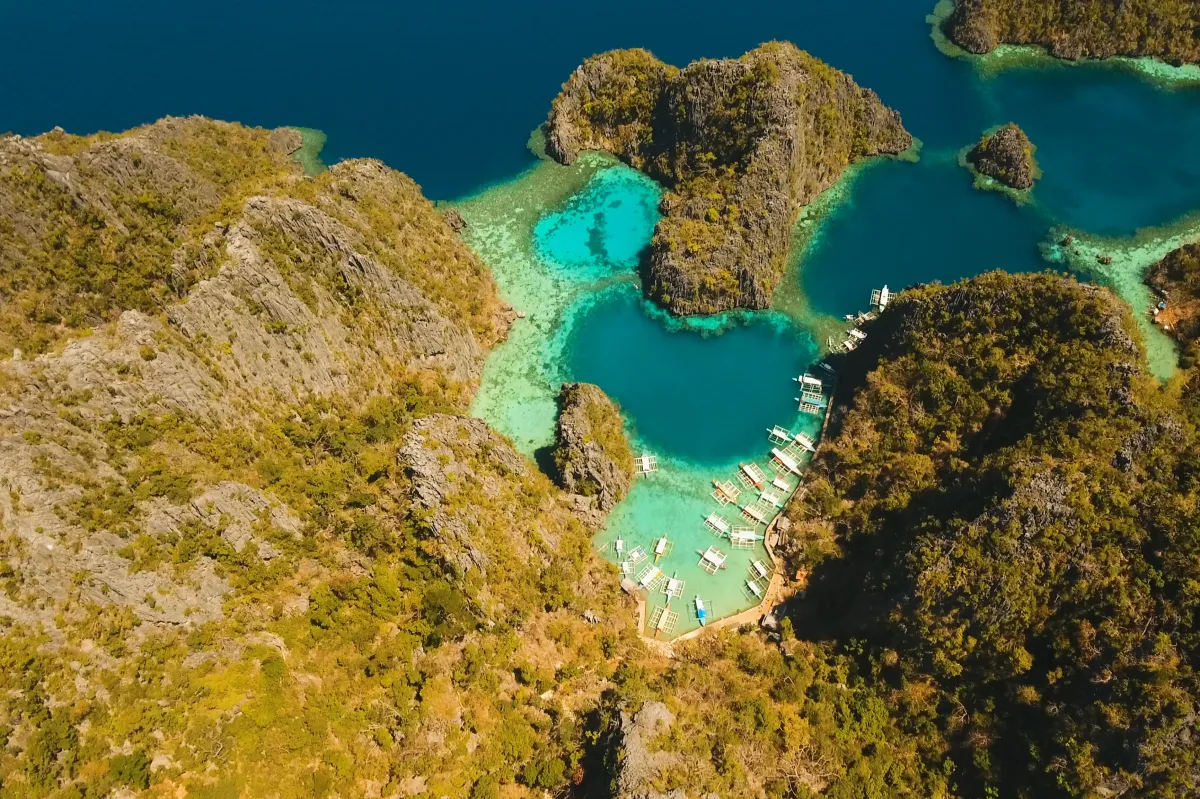
Islands of Wonder: The Filipino Spirit of Exploration
The Philippines’ landscapes—mountains, rivers, caves, and oceans—offer endless opportunities for learning and inspiration.
The Philippines has always been a nation shaped by journeys.
Long before airports, highways, and travel guides existed, Filipinos were already crossing seas, navigating islands, building communities along coastlines, and carrying stories from one shore to another. Water connected people before roads ever did. Boats became bridges between cultures, traditions, languages, and dreams spread across more than seven thousand islands.
Perhaps this is why exploration feels deeply connected to Filipino identity.
To be Filipino is, in many ways, to understand movement.
Movement toward opportunity.
Toward survival.
Toward family.
Toward discovery.
Across generations, Filipinos have traveled not only through oceans and provinces, but also through hardship, reinvention, migration, and hope. Journeys shaped the country’s history long before modern tourism transformed islands into destinations seen through postcards and social media feeds.
And while the Philippines is globally admired for its breathtaking beaches and landscapes, the true beauty of Filipino exploration has always lived beyond scenery.
It lives in stories.
In courage.
In resilience.
In the emotional connections people build while searching for meaning across places both familiar and unfamiliar.
Because for many Filipinos, travel is never only about escaping.
It is about remembering.
Rediscovering identity.
Understanding the home more deeply.
And finding pieces of yourself in places you never expected to belong to emotionally.
The Philippines Beyond Paradise
To outsiders, the Philippines often looks like paradise.
Crystal clear waters. White sand beaches. Palm trees moving gently against tropical skies. Hidden islands surrounded by cliffs and coral reefs. Sunsets stretch endlessly across the horizon.
And yes, those places are real.
But the Philippines is more than scenery.
Beyond every coastline exists a culture shaped by centuries of resilience and adaptation. Fishing villages where generations continue living closely connected to the sea. Mountain communities preserving weaving traditions and ancestral practices. Cities overflowing with movement, noise, creativity, and survival. Small provinces where life still moves slowly enough for people to know each other by name.
Traveling through the Philippines reveals emotional depth impossible to capture through photographs alone.
Because the soul of the country has always lived inside its people.
The warmth of strangers helping travelers without hesitation. Families share meals generously despite having little themselves. Children laughing in flooded streets after heavy rain. Locals give directions carefully, even when busy. Vendors remember faces after only one visit.
These small moments stay with people longer than landmarks often do.
Because they reveal something deeper than tourism.
They reveal humanity.
Why Filipinos Are Natural Explorers
Filipinos have always adapted through movement.
Historically, communities traveled between islands for trade, livelihood, and cultural exchange. Later generations traveled abroad for work, education, survival, and opportunity. Migration became deeply woven into Filipino life, shaping families across continents.
As a result, many Filipinos grow up emotionally understanding both departure and return.
The excitement of leaving.
The ache of homesickness.
The hope carried inside unfamiliar places.
The emotional relief of finally coming home again.
This constant movement shaped a uniquely Filipino relationship with exploration. Travel is rarely just recreational. Often, it carries emotional purpose.
Some journeys are made for survival.
Others for healing.
Some for ambition.
Others simply for understanding yourself better.
And perhaps this is why Filipino travelers often seek more than beautiful destinations alone.
They search for a connection.
Journeys That Become Personal
Not every meaningful journey begins dramatically.
Sometimes it starts quietly.
A bus ride through mountain roads after emotional exhaustion. A solo trip after heartbreak. A ferry ride between islands while questioning life direction completely. A return home after years spent abroad.
Travel changes people because unfamiliar places interrupt routine.
Suddenly, life slows down enough for reflection. People notice things they previously ignored while trapped inside repetitive schedules and responsibilities. The sound of waves at night. Silence in remote provinces. Conversations with strangers carry perspectives completely different from your own.
Journeys create emotional space.
And inside that space, people often rediscover themselves.
Many Filipinos understand this feeling deeply because life itself can become overwhelming. Long work hours, financial pressure, migration, responsibilities toward family, and fast-paced city life often leave little room for stillness.
Travel becomes temporary freedom from noise.
But more importantly, it becomes a reconnection.
The Emotional Meaning of Returning Home
For Overseas Filipinos, especially, one of the most emotional journeys is returning to the Philippines after time away.
Airports become places filled with anticipation and memory. The humid air feels familiar immediately. Hearing Filipino spoken everywhere creates a comfort difficult to explain. Even ordinary things suddenly feel precious again—street food, tricycle rides, family conversations, karaoke drifting through neighborhoods late at night.
Distance changes how people see home.
Things once overlooked become deeply meaningful.
A favorite childhood meal. Jeepney rides through crowded streets. Watching relatives gather together during celebrations. Familiar humor impossible to fully translate abroad.
Many Filipinos realize the beauty of being Filipino most clearly after temporarily living without daily access to Filipino culture itself.
Because sometimes, distance sharpens appreciation.
And journeys home become emotional reminders that identity is something carried within you, no matter how far away you travel.
Island Life and the Beauty of Simplicity
Something is healing about island life.
Perhaps it is the slower rhythm. The way mornings begin quietly beside oceans instead of traffic. The feeling of time stretching differently in places where sunsets matter more than schedules.
Many Filipino islands remind travelers that life does not always need to move so quickly.
Fishermen preparing boats before sunrise. Children swim freely near shorelines. Families gather outside during evenings while neighbors talk casually across the street. Small cafés overlooking the sea where people linger without urgency.
These moments feel powerful because modern life often feels emotionally overcrowded.
Cities demand speed constantly. Notifications interrupt silence. Productivity becomes tied to self-worth. People forget what presence feels like.
But islands teach patience.
And perhaps this is why so many travelers leave places like Palawan, Siargao, Batanes, or Camiguin feeling emotionally changed rather than simply entertained.
Nature creates perspective.
The Filipino Spirit of Hospitality
One thing travelers consistently remember about the Philippines is Filipino hospitality.
Warmth exists naturally here.
Strangers become a temporary family quickly. Locals guide visitors without expecting anything in return. Meals are shared generously. Communities make people feel welcomed even in unfamiliar places.
This hospitality reflects something deeply Filipino.
The instinct to care for others emotionally.
And perhaps this is why journeys across the Philippines often feel personal rather than transactional. People do not only remember destinations.
They remember how those places made them feel.
Seen.
Welcomed.
Connected.
In a world increasingly driven by speed and isolation, this warmth becomes unforgettable.
Travel as Cultural Rediscovery
Modern Filipino travelers are also rediscovering local identity through exploration.
For years, international destinations were often viewed as more aspirational than local travel. But today, many Filipinos are exploring provinces, traditions, cuisines, and communities within the Philippines more intentionally.
This shift matters.
Because traveling locally often creates renewed appreciation for Filipino culture itself. Young Filipinos discover weaving traditions, regional stories, indigenous artistry, local music, and ancestral practices previously absent from urban lifestyles.
Travel becomes education.
Not through textbooks.
But through lived experience.
And through these journeys, many people begin understanding that Filipino identity is far richer and more diverse than they once realized.
The Journey Beyond Geography
Of course, not all exploration happens physically.
Some journeys happen emotionally.
A person reconnecting with family after years of distance. Someone rediscovering cultural pride after spending years feeling disconnected from identity. A young Filipino learns that success does not require abandoning heritage in order to feel globally respected.
These journeys matter deeply, too.
Because exploration is not only about crossing oceans.
Sometimes it is about understanding yourself more honestly.
What Makes Filipino Exploration Different
Perhaps what makes Filipino exploration unique is that it often remains deeply emotional.
Filipinos not only travel to see places.
They travel carrying memory, sacrifice, family responsibility, longing, and hope alongside them. Journeys become tied to identity because movement itself has shaped so much of Filipino history and modern life.
And despite hardship, Filipinos continue carrying something remarkable into every journey.
Warmth.
Humor.
Adaptability.
Resilience.
The ability to create connections almost anywhere.
Islands of Wonder
So what truly makes the Philippines a land of wonder?
It is not only the beaches.
Not only the islands.
Not only the landscapes people photograph and post online.
The real wonder lives inside the spirit of the people moving through them.
The courage to keep exploring despite uncertainty.
The resilience to rebuild repeatedly.
The ability to remain kind despite hardship.
The emotional openness allows strangers to become family, even temporarily.
Because beyond every island exists a story.
And beyond every journey exists the possibility of becoming more connected—not only to places, but to identity, culture, and humanity itself.
Perhaps that is the Filipino spirit of exploration.
Not simply discovering the world.
But discovering meaning within it wherever the journey leads next.
